The Significance of Making Du’a for Your Parents
Reflection & Spirituality | Ta’leem Academy
There is a du’a so simple, so short, that a child can memorize it in minutes — yet so profound that scholars have written volumes about it. It is the du’a Allah ﷻ Himself placed in the Quran, on the tongue of every believer who has ever loved their parents:
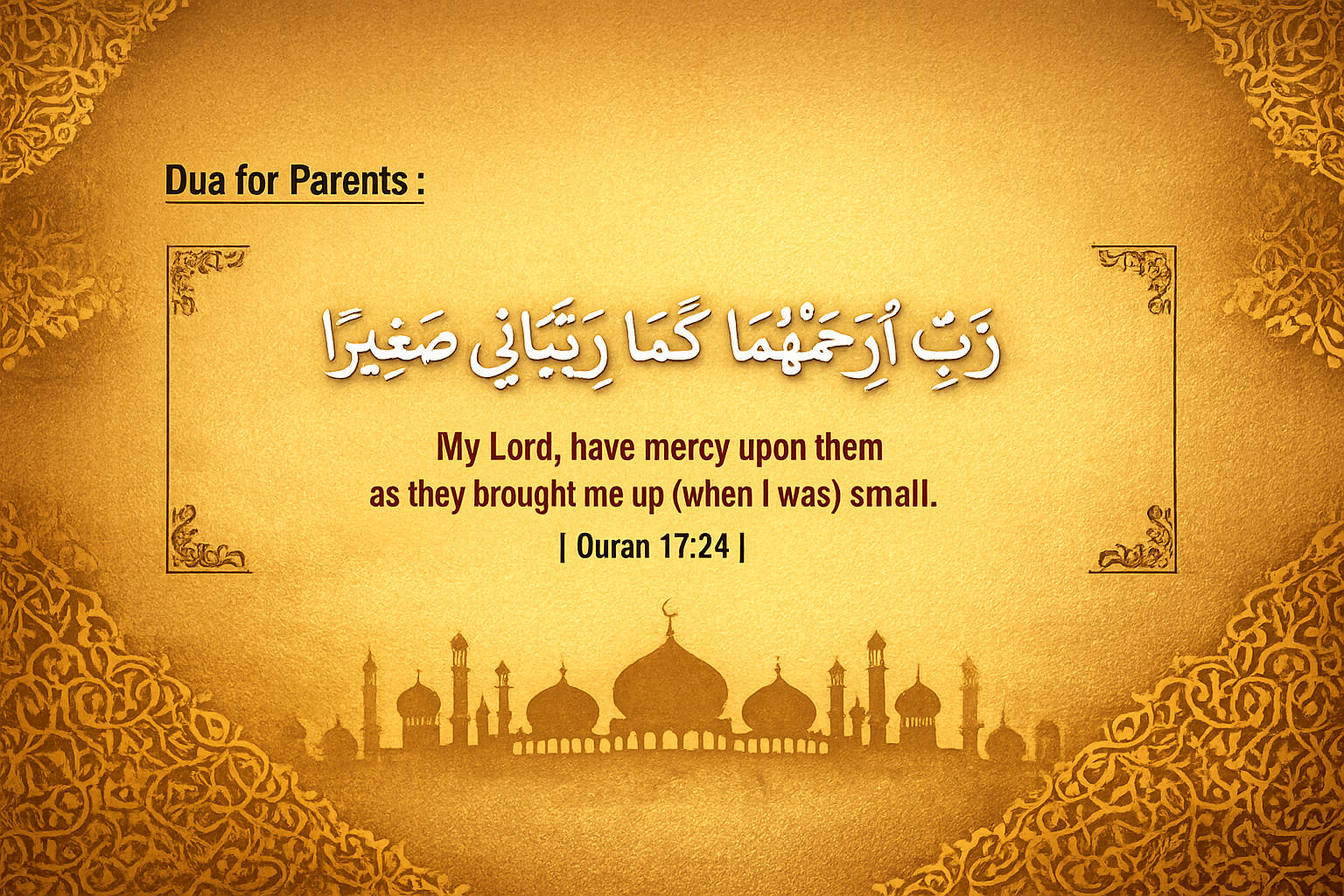
“My Lord, have mercy upon them as they raised me when I was young.” — Surah Al-Isra (17:24)
Four words in Arabic. A lifetime of meaning.
This single supplication carries within it five extraordinary significances — each one a reason why making du’a for our parents is among the most powerful acts a Muslim can perform.
1. Gratitude for Sacrifices
Every child is born into a debt they did not choose and cannot fully repay.
From the first breath, parents give — their sleep, their health, their dreams, their years. A mother carries her child through pain and exhaustion. A father works in silence for decades so his family never feels the weight of struggle. They sacrifice comfort, ambition, and sometimes their own wellbeing — all without a receipt, without a contract, without expectation of return.
Du’a is the language of gratitude when words fall short.
When we raise our hands and ask Allah ﷻ to bless our parents, we are acknowledging — before the Lord of all worlds — that we did not arrive here alone. That behind our education, our opportunities, our faith, our very existence — there were two people who gave everything.
The Prophet ﷺ said:
“Whoever is not grateful to people is not grateful to Allah.” — (Abu Dawud)
Gratitude, in Islam, is not a feeling. It is an action. And one of the most sincere actions a child can take is to remember their parents in the sacred space of du’a — where no pretense exists, only the heart laid bare before Allah.
Making du’a for your parents is gratitude in its purest, most elevated form.
2. Continued Reward — Sadqa-e-Jaariya
Here is a truth that should move every heart: your du’a for your parents does not expire.
When a parent passes from this world, their deeds are sealed. The book closes. But one channel remains open — the righteous child who prays for them.
The Prophet ﷺ said:
“When a person dies, all their deeds come to an end except three: ongoing charity (Sadaqa Jariya), knowledge that benefits others, or a righteous child who prays for them.” — (Sahih Muslim)
This is among the most extraordinary gifts Islam offers. A son who makes du’a for his deceased mother sends light into her grave. A daughter who prays for her father’s forgiveness becomes, herself, an act of charity that flows on his behalf — even though he can no longer act.
Your du’a is their Sadqa-e-Jaariya.
Think about what this means. Long after parents have left this world — when they can no longer fast, pray, or give in charity — their child’s supplication continues to reach them. Every “Rabbir hamhuma” whispered in the night is a gift delivered directly to their soul.
This is not a small thing. This is one of the greatest mercies Allah ﷻ has placed in the parent-child relationship — that love does not end at death, and that a righteous child is among the most valuable inheritance a parent can leave behind.
3. Divine Command & Reward
Making du’a for parents is not merely recommended. It is a Divine instruction.
Allah ﷻ commands in Surah Al-Isra:
“Your Lord has decreed that you worship none but Him, and that you be kind to parents. Whether one or both of them attain old age in your life, say not to them a word of contempt, nor repel them, but address them in terms of honor. And, out of kindness, lower to them the wing of humility, and say: ‘My Lord, bestow on them Your Mercy even as they cherished me in childhood.'” — (Surah Al-Isra, 17:23-24)
Notice the structure of this verse. Allah ﷻ places kindness to parents immediately after the command to worship Him alone — second only to Tawheed. This is not coincidence. This is divine prioritization.
And within that commandment of kindness, He teaches us a du’a. He does not leave us to figure out how to honor our parents — He gives us the exact words.
This means that every time we make this du’a, we are fulfilling a direct command of Allah ﷻ. And with Divine commands come Divine rewards — rewards that multiply in ways we cannot calculate, that echo through this life and into the next.
The believer who consistently prays for their parents is not merely doing something kind. They are obeying their Lord. And Allah ﷻ does not let obedience go unrewarded.
4. Healing the Parent-Child Relationship
Not every parent-child relationship is easy. Some carry wounds — old misunderstandings, harsh words, absent years, unmet needs. Some children approach the du’a for parents with complicated hearts, carrying both love and pain in the same breath.
And yet — perhaps especially for them — this du’a holds profound healing.
When we make du’a for someone, something shifts within us. It is difficult to harbor bitterness toward a person while sincerely asking Allah to shower them with mercy. The act of supplication softens the one who supplicates. It moves us from resentment toward empathy, from distance toward connection — even when the relationship itself remains imperfect.
The Prophet ﷺ taught us that maintaining family ties is among the greatest acts in Islam. Du’a is the most intimate form of that maintenance — it takes the relationship into the presence of Allah ﷻ and asks Him to mend what human hands cannot.
For the child whose parent is difficult — who struggles to understand or be understood — du’a becomes a bridge. It says: “I cannot always fix what is between us, but I trust Allah to heal what I cannot reach.”
Even when physical presence is painful, du’a keeps the heart open. And an open heart is where healing begins.
5. Seeking Allah’s Mercy as Parents Age
There comes a stage in every parent’s life that the Quran specifically acknowledges — old age.
“Whether one or both of them attain old age in your life…” — Allah ﷻ did not use this phrase carelessly. He highlighted this season because He knew what it would bring: vulnerability, dependence, illness, fear, and the quiet longing for the child who once needed them to now simply be near.
As parents grow older, their needs shift. They can no longer carry the burdens they once carried. Health becomes fragile. Memory fades. Independence dims. And in this season, what they need most — beyond medicine, beyond comfort — is mercy.
Du’a is our way of asking Allah ﷻ to surround them with exactly that.
We ask for His mercy upon their aging bodies. His forgiveness for their past mistakes, as we hope He will forgive ours. His protection over their health, their faith, their peace. His light in their final days and ease in their final moments.
This is not a small du’a. This is a child standing before Allah and saying: “I cannot protect them the way they once protected me — but You can. And I am asking You to.”
It fulfills what no doctor’s visit, no financial provision, no amount of physical care fully can — the spiritual protection of a parent’s soul, in the hands of the One who holds all souls.
The Complete Picture
Taken together, these five significances paint a portrait of something extraordinary.
When a child makes du’a for their parents, they are:
- Expressing gratitude for sacrifices that can never be fully repaid
- Sending ongoing reward to parents — in life and after death — as Sadqa-e-Jaariya
- Fulfilling a Divine command that Allah placed second only to Tawheed
- Healing their relationship with their parents through the softening power of sincere supplication
- Seeking Allah’s mercy and protection for parents in their most vulnerable years
One du’a. Five profound realities.
A Practice to Begin Today
If you do not already make du’a for your parents regularly, let today be the beginning.
After every prayer, before you move from your prayer mat, raise your hands and say:
رَّبِّ ارْحَمْهُمَا كَمَا رَبَّيَانِي صَغِيرًا “My Lord, have mercy upon them as they raised me when I was young.”
If your parents are alive — this du’a is an act of love and obedience. If your parents have passed — this du’a is a light sent to their graves. If your relationship is difficult — this du’a is the beginning of healing.
In every situation, in every season, this du’a is never wasted.
Closing: The Righteous Child
The Prophet ﷺ described the righteous child who prays for their parents as one of three acts that continue after death. He did not say perfect child. He did not say successful child. He said righteous — one who is conscious of Allah and chooses goodness.
You do not need to be a scholar. You do not need to have a perfect relationship with your parents. You do not need to have never made mistakes.
You only need to turn your face toward Allah, raise your hands, and ask.
That asking — sincere, consistent, humble — is itself one of the greatest gifts you will ever give. To your parents. To yourself. And to the generations that will one day make du’a for you.
May Allah ﷻ accept our du’as for our parents. May He have mercy on those who have passed, and grant health and peace to those still with us. May He make us among the righteous children whose prayers are a sadqa-e-jaariya that reaches our parents long after we are gone.
Ameen.
A reflection for the Ta’leem Academy community — honoring the parents, donors, and families whose sacrifices make this work of knowledge and faith possible.